Risk and Reward in the Brain – Why We Sometimes Take Irrational Gambles


Risk and Reward in the Brain – Why We Sometimes Take Irrational Gambles
Why do we keep taking chances even when the odds are clearly against us? Why does a “near win” feel like a sign that we’re getting closer, urging us to try again? The answer lies deep in the brain, where our reward system can trick us into chasing feelings rather than logic. Research in neuroscience and behavioral economics shows that our appetite for risk isn’t just about money—it’s about chemistry, emotion, and evolution.
Dopamine – The Brain’s Reward Signal
Whenever we anticipate a possible reward—whether it’s a lottery ticket, a stock investment, or a social “like”—our brain releases dopamine. This neurotransmitter fuels feelings of excitement and motivation. But dopamine doesn’t just spike when we win; it also rises when we expect a reward.
That means the thrill of taking a risk can be almost as satisfying as the reward itself. This is why we can get caught in a loop of chasing that “almost there” feeling, even when we know the math doesn’t favor us.
Risk as an Evolutionary Advantage
From an evolutionary standpoint, risk-taking once had survival value. Our ancestors who dared to explore new territories or try new hunting strategies sometimes found more food or better shelter—but they also faced greater danger. Over thousands of years, this balance between caution and courage shaped the human brain.
Today, the same neural mechanisms play out in very different arenas: in financial markets, casinos, relationships, and career choices. We’re wired to respond to uncertainty—and sometimes we overestimate our ability to control outcomes.
When the Brain Overvalues “Almost Wins”
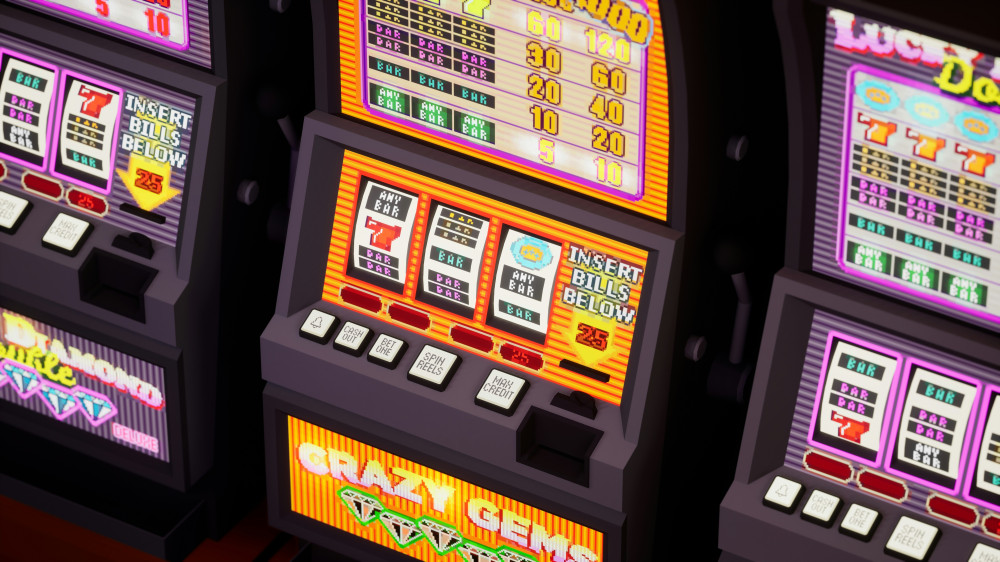
One of the most fascinating findings in gambling research is the “near miss” effect. When a slot machine shows two matching symbols and a third just barely misses, the same brain regions light up as when we actually win. It feels like progress, even though it’s objectively a loss.
This reaction is emotional, not rational. The brain interprets “almost” as a sign of improvement, motivating us to keep playing. It’s one reason people can continue to gamble—or take other risky bets—even after repeated losses.
Læs også:




Losses Hurt More Than Gains Feel Good
Another key principle in behavioral economics is loss aversion. We feel the pain of losing more intensely than the pleasure of winning the same amount. Losing $100 feels worse than winning $100 feels good. This emotional imbalance can drive us to chase losses, trying to “win it back”—a strategy that rarely ends well.
Because our brains are more sensitive to loss than to gain, we often make decisions that defy logic. We act to avoid pain rather than to maximize reward, even when the numbers tell us otherwise.
Can We Train the Brain to Decide Better?
Although our brains are biologically tuned to respond to risk and reward, we can learn to manage those impulses. Studies suggest that awareness of our own patterns—and taking time before making decisions—can reduce irrational choices.
Setting clear limits, relying on data instead of gut feelings, and focusing on long-term goals rather than instant gratification are strategies that help. The goal isn’t to eliminate risk, but to take it with open eyes.
Risk as Part of Being Human
Taking chances is part of what makes us human. Without risk-takers, we wouldn’t innovate, explore, or grow. But when risk is driven by emotion instead of reason, it can lead us astray.
By understanding how the brain responds to reward and uncertainty, we can learn to balance courage with caution—and take the kinds of risks that truly pay off.
Læs også: